


The Ultimate Guide to Whale Watching Season in Cabo San Lucas
Cabo San Lucas is one of the few places on Earth where the desert meets the sea to host a breathtaking natural spectacle: the migration of Humpback and Gray whales. At King Yacht Los Cabos, we know this is the most sought-after experience for our guests. This guide will help you plan the perfect journey to witness these gentle giantse la publicación.
WHALE WATCHING SEASON IN CABO SAN LUCASPRIVATE BOAT TOURSYACHT RENTALS QUESTIONS AND ANSWERSYACHT BOOKING GUIDESNORKELING & WATER ACTIVITIES
Marlinio
2/22/20261 min read
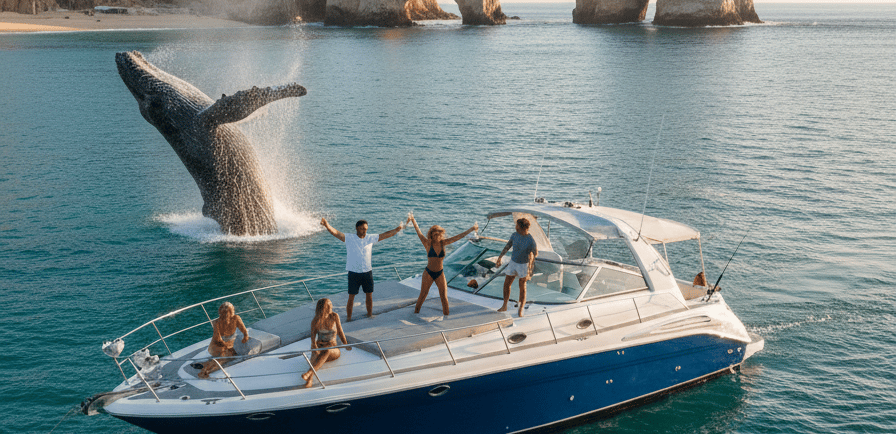
When is Whale Watching Season in Cabo San Lucas?
Nature doesn't follow a strict calendar. While official regulations typically mark the start of the season in mid-December, the arrival of these whales depends on ocean temperatures and migration patterns.
Generally, you can expect to see whales from mid-December through early May. However, for those seeking maximum activity—such as iconic breaches—the peak season is considered to be January, February, and March.
FAQ: Everything You Need to Know
1. Is the start of the season 100% accurate?
No. Whales migrate thousands of miles from Alaska. Some years they arrive early in late November, and others they linger into May. At King Yacht, we provide real-time updates from our captains on sighting probabilities.
2. What types of whales will I see?
The stars are the Humpback Whales, famous for their acrobatic jumps. You may also encounter the Gray Whale, which is often spotted closer to the coast.
3. Why choose a private yacht over a public tour?
A private charter with King Yacht Los Cabos offers:
Absolute Privacy: Only you and your guests.
Superior Comfort: Private bathrooms, shaded lounges, and premium catering.
Expert Vantage Point: Stability for the perfect photo near "The Arch."
4. What is the best time of day for sightings?
Morning: Calmer seas, ideal for families and seeing resting whales.
Afternoon: Spectacular golden lighting, perfect for photography as the sun sets behind the whales.
Enjoy unforgettable yacht tours.
CONTACT Us
© 2025. All rights reserved.